Hope for Migraineurs

A member from my Facebook group! Enjoy the reading and that cute picture of hers! 🙂

exultinginmonotony's avatarMontony with Style

I’m 37 and I’ve had migraines for my entire life. When I was a child, I couldn’t swallow pills and I couldn’t take soluble aspirin, so I used to get light sensitive and vomit and have to sleep it off on a regular basis. I missed a lot of quarter or half days of school. I remember that I used to stay home until I felt better, then go to school for the rest of the day.

IMG_5207 Me at 5 in the dress at the Fancy Dress. The migraine hadn’t started yet.

I had a beautiful red velvet dress when I was five. I liked to wear it and I dreaded wearing it- I noticed that I got a headache every time I wore it. I got a headache every time we had a fancy dress folk-dance event (A yearly occurrence.), or other events in crowded, stuffy, overheated rooms. I…

View original post 1,683 more words

Posted in On Migraines | Leave a comment

Migraines? Read this Review

I have a migraine group on Facebook “Migraine Sufferers who Want to be Cured” where I currently have over 1500 members. Many have achieved great success with reading my book “Fighting The Migraine Epidemic: How To Treat and Prevent Migraines Without Medicines – An Insider’s View” and are participating in further discussions in the group on how to apply it properly. The book is available in e-book and paperback formats.

One of my Facebook group members let her chiropractor, Michael Ashby, borrow her book for a read, since migraine sufferers often go to chiropractors to get migraine pain relief. The doctor puts out newsletters on occasion for his patients. I  have just received his newsletter from my group member that I would like to share with you:

For migraine sufferers (migraineurs) – A patient introduced me to a book on natural approaches to Migraine. Angela Stanton, PhD was a long time migraine sufferer that found [that] simple balance in your sodium, potassium, magnesium and calcium can be very helpful for some migraine triggers. The book is called “Fighting the Migraine Epidemic.” I think she has some great tools for migraines and it does not involve another drug.

This quote is from the doctor’s newsletter! I am more than thrilled that doctors are spreading the word about my book–many have by now but this is the first newsletter release I received from a doctor who deals with migraineurs day in and day out!

Thank you Dr. Michael Ashby and thanks to my group members who are so supportive! They feel great and can control their migraines by preventing or aborting them without medicines!

Thank you all!

And for those of you not yet familiar with the secrets of migraine free life, please join us in my migraine group and spend $3 on the e-book that comes with a free software/app for any platform you prefer to read the book on. If you prefer the paperback, it is less than $18 at the moment–prices change based on the retailer/online retailer you purchase it from and new or used.

If you have any questions, please ask!

Comments are always welcome!

Angela

Posted in On Migraines | Tagged , , , , , | Leave a comment

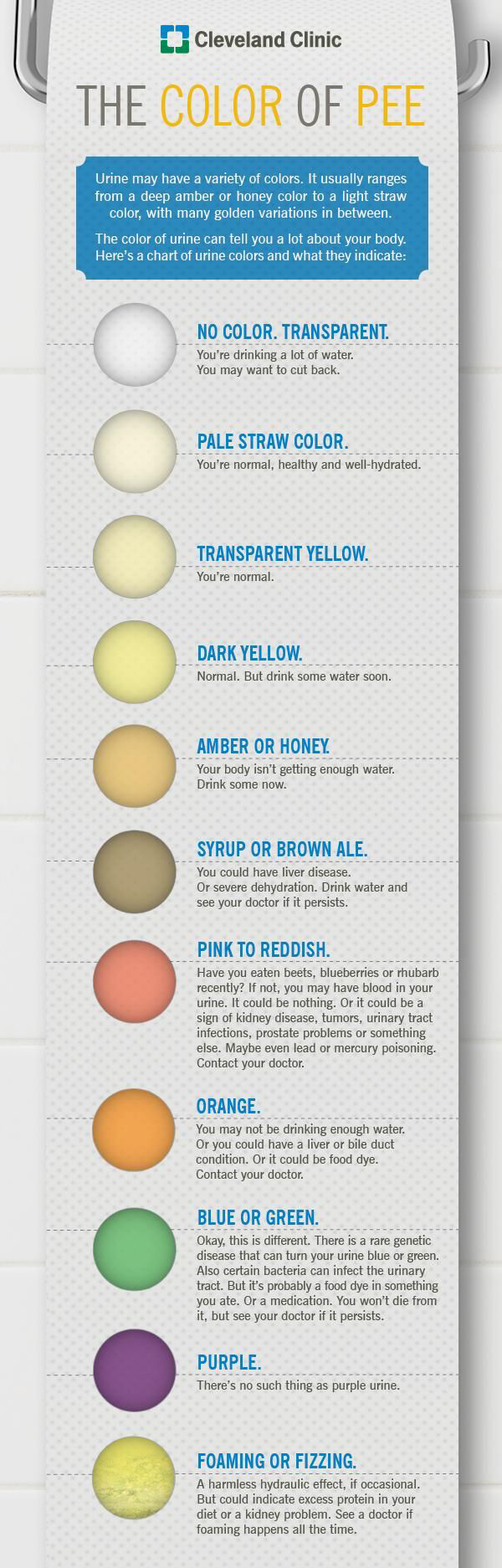
Urine Color For Your Health

urine color chart

urine color chart

Posted in On Migraines | Tagged , , , | 2 Comments

Depression, Anxiety, Chronic Fatigue Syndrome, Migraine & Salt!

What do Depression, Anxiety, Chronic Fatigue Syndrome, and Migraine have in common?

I am a recovered migraineur and I regularly write about the cause of migraines, their ill effects, and how to prevent and treat migraines. While anxiety can be part of the migraine experience, depression and chronic fatigue are not usually connected to migraines. For me depression and chronic fatigue seemed to be a separate set of conditions, sharing no similarities with migraines at all. That was until I bumped into an article in the Scientific American “I Suddenly Feel Calm” (Lonzano and Mayberg) and another one in the news online. Since then I have searched through many journal articles, online posts, etc., to find possible connections among migraines, depression and chronic fatigue. I found both pro and con arguments that seem valid. However, all articles, including those finding that salt helps to treat these conditions, and those that describe experiments with deep brain stimulation (DBS) techniques, miss a very relevant point of connection. In this article, I intend to connect the dots for you.

Salt and Migraines

I would like to begin by explaining a bit about another set of important dots I connected first that lead me to the establishment of a protocol for complete migraine prevention and treatment without medications. This is informative here for connecting depression and chronic fatigue to the same causes as migraine. In summary: the pain of migraine is a symptom of an underlying condition that I call  hyper-sensitive sensory organs (heightened sensitivity to odors, light, touch, sound, etc.,) caused by energy depleted cells. A substance required, but often missing, for additional energy production is salt.

Depolarized brain regions (cortical depressions) can be a result of salt depletion. Salt is necessary for ion channel functioning, required to polarize all regions of the brain. Thus, my migraine group members and I have been able to prevent and treat our migraines simply by eating salt as part of a hydration protocol. The migraine pain itself is created by the actions of the healthy polarized brain regions as they send waves of electric signals (cortical spreading) to wake up the depolarized regions. This is similar to how we try to shock life back into the heart of a heart attack victim. A research team viewing cortical spreading in the scanner, while people were having either migraines or seizures, found that when the cortical spreading is fast it leads to a seizure and when it is slow it triggers a migraine This suggests that migraines and seizures are related in some way.

We know that many migraineurs suffer with anxiety and many more also are depressed and have chronic fatigue, can salt deficiency be related to those symptoms as well?

Cortical Deporalization and Depression

Researchers using fMRI found that those with clinical depression have a “black inactive brain region” deep inside the brain. This inactivity was due to permanent depolarized state so they did what we do for heart attacks: zapping that region by an electrical current in a difficult way. They surgically opened the scull and stimulated the depolarized region by electricity of various strengths to awaken it. The person undergoing this surgery is awake since it is painless—there are no pain sensors inside the brain. The person would then be able to explain how she or he felt and the depression lifted as long as the electrical stimulation was active. Similarity point one: depolarized region exists in both migraine and depression and appear to cause the respective either pain or depression, respectively.  Point two: electrically stimulating regions that are depolarized alleviate pain in migraine for just about everyone and alleviated depression for clinically depressed people in the experiments. This seems logical: the cause appears to be the same only in different regions. This also explains why some migraineurs sometimes get a migraine with depression and sometimes they do not. It is possible that the regions depolarized may be capable of initiating both migraine pain and also depression, depending on location. This implies that the location of migraines is important and this recognition should help us lead to a proper treatment, and it is not likely to have anything to do with antidepressants.

I don’t know if you can see the connection clearly here so let me put it in a different way.

Migraines are caused by depolarized zones.

Add salt => polarization => migraine gone.

Depression is caused by depolarized zone.

Add salt => polarization => depression gone?

This has not been tested scientifically but informally I can state that in the current membership of my Facebook migraine group of over 1000 migraineurs, most with anxiety, some with depression, chronic fatigue and also fibromyalgia, an overwhelming majority uses the salt protocol very successfully to prevent and stop migraines and none remains depressed or experiences chronic fatigue after the protocol. Of course I do not know if they were clinically depressed since that has not been the focus of the group. But if the problem is a depolarized region in the brain that responds to salt as the polarizing agent and if that is in fact the cause of depression, why not try salt for the treatment of depression?

This concept is further strengthened by the news article’s distinction between five different types of clinical depressions of which migraineurs share a lot with the 4th form: “Low-Folate Depression.” It seems that this group of depressed people, similarly to most migraineurs, is low in B-12 and often need anxiety medications—benzodiazepines with long half-life appear to be the most beneficial (lacking B-12 can often mask folate B-9 deficiency).  People receiving SSRI with low folate tend to become violent. Could this form of depression be similar to migraines?  Just as SSRIs don’t work for migraines and they also don’t work for this kind of depression that represents 20% of all depression cases, would that mean that this type of depression may be helped by salt the way migraine is?

Chronic Fatigue and Migraine: Is There a Connection?

Chronic Fatigue Syndrome (CFS) falls straight into the category of not having enough polarization.  It affects people who aren’t necessarily migraineurs— they may not have the gene for hyper sensory sensitivity—they need salt to achieve proper polarization at a different level than what the cookie-cutter salt recommendation of the USDA advises. The USDA recommends a moving target sodium level of anywhere between 1300 mg to 2700 mg per person. A 1951 study (the only one I could find measuring this factor) found that migraineurs empty 50% more sodium in their urine than non-migraineurs; they also noted that migraineurs were “busy brain” people, which is equivalent to hyper sensory organ sensitivity. Thus migraineurs need 50% more sodium if they excrete 50% more in order to keep up with their busy brains.

Migraine and Anxiety

Now let’s talk about anxiety. Nearly 100% of migraineurs have anxiety problems likely related to the initial hyper-sensitivity of the sensory organs perceiving danger and causing anxiety. Such hyper-sensory organ sensitivity provided valuable benefits that saved lives in our evolution. Smelling the lion in the bush from 2 miles instead of 2 feet has definite advantages—I have this sensitivity, so I know. This sensitivity comes with anxiety for a good reason! Anxiety is a normal part of our life to save us from danger. Our city life reformulated anxiety into a burden, just as it did with our hyper sensitivity. Because we do not run away from the lion in the bush we end up with IBS, anxiety syndrome, RLS, and several other connected conditions as a result of not expending all that adrenalin that builds up. It is hard to envision that salt would have anything to do with all this but I think it does. Let me explain.

With anxiety comes the release of adrenaline. Adrenaline initiates a number of brain activities. To fuel this increased activity, our brain needs a lot of energy. When someone is salt deficient, the ion channels that open and close the gates to cells and neurons, allowing the activity of these cells to continue to exchange nutrients, are impaired. Fuel sources become more limited and cell function declines, resulting in migraines for many people. With anxiety a hyper sensory organ brain uses more salt for the extra polarization needed to respond to the environment. Not having enough salt, thus may mediate the perceived sense of anxiety. Anxiety experienced by migraineurs may be the result of salt depletion by sensory organ hyper use suggesting that a common thread among migraines, chronic fatigue syndrome, depression, and anxiety is the presence of salt depletion in certain brain areas.

Why Salt?

While we may or may not understand exactly how most medicines work, we know precisely what salt does. It is essential to our cells’ ionic balance and the maintenance of proper action-potential for creating electrically charged active transport systems that control what can move into and out from our cells. Salt is essential to polarize cells and to keep balance. If there is no depolarization in any part of the brain, there is no migraine, there is perhaps no depression (more research is needed on that) and perhaps no anxiety or chronic fatigue either!

I believe that the importance of salt in health has grossly been underestimated.  Without salt we die, since no cell can function. The studies finding depolarized regions in the brain hint at the positive effects of salt use. Let’s go after depression, chronic fatigue, and anxiety now.

Sources:

Probing and regulating dysfunctional circuits using deep brain stimulation. Lozano AM1, Lipsman N. Neuron. 2013 Feb 6;77(3):406-24.

Salt craving: The psychobiology of pathogenic sodium intake Michael J. Morris*, Elisa S. Na*, and Alan Kim Johnson Physiol Behav. 2008 August 6; 94(5): 709–721

Augmentation of antidepressants with atypical antipsychotic medications for treatment-resistant major depressive disorder: a meta-analysis. Papakostas G I, Shelton R C, Smith J, Fava M. Journal of Clinical Psychiatry 2007; 68(6): 826-831

Deep brain stimulation for treatment-resistant depression. Taghva AS , Malone DA, Rezai AR. World Neurosurg. 2013 Sep-Oct;80(3-4):S27.e17-24. doi: 10.1016/j.wneu.2012.10.068. Epub 2012 Oct 27.

Effects of low sodium diet versus high sodium diet on blood pressure, renin, aldosterone, catecholamines, cholesterol, and triglyceride. Graudal NA , Hubeck-Graudal T, Jurgens G. Cochrane Database Syst Rev. 2011 Nov 9;(11):CD004022.

A multicenter pilot study of subcallosal cingulate area deep brain stimulation for treatment-resistant depression. Lozano, M.D., Ph.D., F.R.C.S.C., et al., J Neurosurg 116:315–322, 2012

Brain electrodes fix depression long term. Alison Abbott Nature doi:10.1038/nature.2012.9727

The Brain Reward Circuitry in Mood Disorders. Scott J. Russo and Eric J. Nestler. Nat Rev Neurosci. 2013 September ; 14(9)

Nutritional Strategies for Treating Chronic Fatigue Syndrome. Melvyn R. Werbach, M.D. Alternative Medicine Review  Volume 5, Number 2  (2000)

Is neurally mediated hypotension an unrecognised cause of chronic fatigue? Rowe PC , Bou-Holaigah I, Kan JS, Calkins H. Lancet. 1995 Mar 11;345(8950):623-4.

The relationship between neurally mediated hypotension and the chronic fatigue syndrome. Bou-Holaigah I , Rowe PC, Kan J, Calkins H. JAMA. 1995 Sep 27;274(12):961-7.

Low dietary sodium is anxiogenic in rats. M. Leshem. Physiology & Behavior 103 (2011) 453–458

 

Posted in On Migraines | Tagged , , , , , , , , , , , , , | Leave a comment

Migraineurs’ Recipes on Pinterest!

New Pinterest site for migraineurs with awesome recipes and goodies! Courtesy of one of our Facebook group members! Please check it out! It is just starting and will grow as we go.

https://www.pinterest.com/migraineslikeme/

Posted in Information | Tagged , , , | Leave a comment

Artificial & Regular Sugar List

Here you find all sugars, be it natural or fake. If you are a migraineur, you need to stay away from all of these as much as possible!

Artificial Sweeteners

  1. ACESULFAME POTASSIUM (common name)
    1. ACK (other ways of writing same or found in)
    2. Ace K
    3. Equal Spoonful (also +aspartame)
    4. Sweet One
    5. Sunett
    1. ASPARTAME
    2. APM
    3. AminoSweet (but not in US)
    4. Aspartyl-phenylalanine-1-methyl ester
    5. Canderel (not in US)
    6. Equal Classic
    7. NatraTaste Blue
    8. NutraSweet
  1. ASPARTAME-ACESULFAME SALT
    1. TwinSweet (Europe only)
  1. CYCLAMATE
    1. Not in US as per FDA
    2. Calcium cyclamate
    3. Cologran = cyclamate and saccharin; not in US
    4. Sucaryl
  2. ERYTHRITOL
    1. Sugar alcohol
    2. Zerose
    3. ZSweet
  3. GLYCEROL
    1. Glycerin
    2. Glycerine
  1. GLYCYRRHIZIN
    1. Licorice
  1. HYDROGENATED STARCH HYDROLYSATE (HSH)
    1. Sugar alcohol
  1. ISOMALT
    1. Sugar alcohol
    2. ClearCut Isomalt
    3. Decomalt
    4. DiabetiSweet (also contains Acesulfame-K)
    5. Hydrogenated Isomaltulose
    6. Isomaltitol
  1. LACTITOL
    1. Sugar alcohol
  1. MALTITOL
    1. Sugar alcohol
    2. Maltitol Syrup
    3. Maltitol Powder
    4. Hydrogenated High Maltose Content Glucose Syrup
    5. Hydrogenated Maltose
    6. Lesys
    7. MaltiSweet (hard to find online to buy)
    8. SweetPearl
  1. MANNITOL
    1. Sugar alcohol
  1. NEOTAME
  1. POLYDEXTROSE

A. Sugar alcohol (Derived from glucose and sorbitol)

  1. SACCHARIN
    1. Acid saccharin
    2. Equal Saccharin
    3. Necta Sweet
    4. Sodium Saccharin
    5. Sweet N Low
    6. Sweet Twin
  1. SORBITOL
    1. Sugar alcohol
    2. D-glucitol
    3. D-glucitol syrup
  1. SUCRALOSE
    1. 1′,4,6′-Trichlorogalactosucrose
    2. Trichlorosucrose
    3. Equal Sucralose
    4. NatraTaste Gold
    5. Splenda
  1. TAGATOSE
    1. Natrulose
  1. XYLITOL
    1. Sugar alcohol
    2. Smart Sweet
    3. Xylipure
    4. Xylosweet

Regular Sugars

  1. Barley malt
  2. Barbados sugar
  3. Beet sugar
  4. Brown sugar
  5. Buttered syrup
  6. Cane juice
  7. Cane sugar
  8. Caramel
  9. Corn syrup
  10. Corn syrup solids
  11. Confectioner’s sugar
  12. Carob syrup
  13. Castor sugar
  14. Date sugar
  15. Dehydrated cane juice
  16. Demerara sugar
  17. Dextran
  18. Dextrose
  19. Diastatic malt
  20. Diatase
  21. Ethyl maltol
  22. Free Flowing Brown Sugars
  23. Fructose
  24. Fruit juice
  25. Fruit juice concentrate
  26. Galactose
  27. Glucose
  28. Glucose solids
  29. Golden sugar
  30. Golden syrup
  31. Grape sugar
  32. HFCS (High Frustose Corn Syrup)
  33. Honey
  34. Icing sugar
  35. Invert sugar
  36. Lactose
  37. Malt
  38. Maltodextrin
  39. Maltose
  40. Malt syrup
  41. Mannitol
  42. Maple syrup
  43. Molasses
  44. Muscovado
  45. Panocha
  46. Powdered Sugar
  47. Raw sugar
  48. Refiner’s syrup
  49. Rice syrup
  50. Sorbitol
  51. Sorghum syrup
  52. Sucrose
  53. Sugar (granulated)
  54. Treacle
  55. Turbinado sugar
  56. Yellow sugar


Posted in Information | Tagged , , , , | Leave a comment

Medicine Reduction for Addictive Drugs

Medicine Reduction Method

Posted in Drug Reduction | Tagged , , , , , | 4 Comments

Get Rid of Your Migraines Too!

Congratulation to all the migraine sufferers in my Facebook group who suddenly are able to treat and prevent their migraines after a couple of weeks of trial and error!!! Now many are going pain free every day, beating back all pain, no brain fog, and are having the happiest and most humorous times of their lives ever! I truly enjoy the change and seeing their progress!

If you have migraines or know someone who does, please ask them to join us at https://www.facebook.com/groups/219182458276615/ where the impossible is coming possible every day! Over 600 members already! join us and see what we do differently to get rid of migraines! No medicines! No herbs!

Comments are welcome!

Angela

Posted in On Migraines | Tagged , , , , , , , | Leave a comment

Sugar, Sugar Substitutes, Headaches & Migraines

Is there a Connection Between Sweets and Migraines?

Indeed there is — as I too found out over the holidays this year. As most of you who read my blog and have read my book probably know I have had migraines for well over 20 years (30 years is more like it) before I realized what caused it. Since then I have been migraine free except for this holiday season. So what is different?

Let me recap the cause of migraine, which is preventable and treatable without any medicines. The details of how and what are in my book Fighting the Migraine Epidemic (shop around for prices if you buy it!) and in several articles at HormonesMatter but here I would like to give a little summary and some additional information about how sweets connect to pain in the head–any pain, be it headache or migraine.

Migraine in Brief

Migraine is not necessarily pain. Migraine is a chemical chain of events that in about 80% of the time culminate in pain but there are silent migraines and many aura migraines that are not followed by pain. The events that lead to migraine are also chemical chain of events that start by ionic imbalance of the brain. In the body everything we eat breaks down into molecules and then ions so that our cells can have their meals. Cells “eat” by having openings (pores, channels, pumps, gates) on the cell membrane through which ions can pass. But an ion by definition has a polarity, meaning it is either positive (+) or negative (-) and if you have ever taken any physics or chemistry or just know about the magnetic poles of earth, you know that “++” or “–” repel and “+” attract. Thus something in ionic form may only enter a cell if it has the right polarity for affinity (attraction), otherwise it is not permitted into the cell.

There are two key ions that initiate the electrical contraction of a cell by creating voltage. Voltage difference causes a contraction that opens some of these pumps, gates, pores, channels, etc., and allows nutrients to go in and toxins to come out in particular order and ion numbers. Two responsible ions for this electricity are the key to migraine. If there is not enough of these ions on both sides of the cell membrane for the creation of voltage, the cell cannot open and depolarization (areas without the capability to create voltage) appear. Depolarized regions in the brain prevent that part of the brain from functioning which after a chain of events creates migraine. The two elements of discussion are Na+ and Cl-, which combined form salt. Thus not enough salt will cause migraines.

What Do Sweets Have to Do with It?

There are basically two kinds of sweets: sugars (sucrose, fructose, glucose) and artificial sweeteners (any kinds other than sugar).

Lets talk about real sugar first. As you can see there are 3 main types. Glucose is the same as what is our blood so it can be called blood sugar. Lactose, sugar in milk is a type of glucose. Sucrose is sugar the body can convert to glucose. It can be found in carbohydrate foods such as rice and potato, which many people avoid as “bad carbs” but are in fact way better than the last group: fructose. How bad fructose is for your body is probably news to you since fruits have tons of fructose in them and we are told that fruits are healthy and we are told to eat them. And so they are! Fructose when you eat it as a fruit with fiber is great. There is a long explanation via video and by book titled Fat Chance by Robert Lustig, M.D. of what fructose is and what it becomes. Few actually understand the seriousness of it so let me explain in as simple way as I can what fructose is and what it does so you can understand its bad effects on the body and on migraine.

Fructose

Fructose is sugar in the fruit. If you eat a spoon of fructose (they sell fructose on its own, try it), your body will experience no change. You will not feel hot (as you would from glucose) and you will not bounce off the walls (as children do from glucose and sucrose) if you only eat fructose as powder, crystal, or liquid. The reason why not is because fructose is not seen by the body as sugar. It doesn’t make it to the brain or muscles as energy source! It goes straight into the liver, where it converts by a long chain of events into ethanol–the alcohol you put into your car to improve mileage. Eating fructose without fiber causes non-alcoholic fatty liver disease and causes obesity.

See when the body does not see sugar and insulin is not released to deposit sugar into fat that later can be converted to blood glucose for the use of the brain, a hormone called leptin tells the brain that there is obviously a famine so it slows all bodily functions to the minimum to save energy, reduces metabolism, and makes you hungry for sugar. So you eat more fructose. The more fructose you eat the more lethargic and obese you will also get and will have no energy to get off the sofa. This is Fat Chance book in a very short summary.

The connection of fructose to migraine is simpler: sugar, similarly to salt, attracts water and collects it. But unlike salt, it cannot enter any cell without creating voltage, which sugar does not do. Thus instead of hydrating cells, it dehydrates via osmotic gradient by pulling water out of the cells. Eating fructose dehydrates cells, interrupts the hydration process, thereby interrupting the very thing that prevents and stops migraines: ionic balance hydration. Fructose causes migraines or headaches that are hard to combat because fructose does not leave the body easily; it is chemically tied down to become other elements, such as ethanol. How it reaches the brain for its dehydration action? Via the circulatory system. Eating fructose removes water from blood circulation via osmotic gradient and since there is less volume of blood (same number of blood cells only each dehydrated), blood pressure increases from eating fructose. You can check all of these out at home using blood pressure meter, placing fructose near water and see how it sucks it up like it had lips, etc.

Artificial Sweeteners

Less is discussed about artificial sweeteners in literature but logic prevails. By artificial sweeteners  I also mean all “natural” sweeteners with zero calorie. Sugar, no matter how natural, with zero calorie is not sugar to the body. Artificial sweeteners do some really nasty stuff: they cause diabetes mellitus type II. How does that happen?

Artificial sweeteners–even zero calorie sweeteners–release insulin. The job of the insulin is to grab the sugar in the blood and convert it to fat for future use by the brain and muscles as sugar–as mentioned earlier. Insulin is in the blood in search of sugar but there is none!! Sugar was not consumed! So insulin floats in the blood for a long time in search of sugar. The constant insulin in the blood signals the body to ignore insulin and hence one develops what is called insulin resistance. This is greatly simplified here for understanding. Something floating in the blood looking for sugar and not finding any will eventually be ignored by the body. Insulin resistance is diabetes mellitus type II.

Should you ever eat or drink foods or drinks, respectively, that contain artificial sweeteners? Never.

How artificial sweeteners connect to migraines should be straight-forward based on what I wrote on fructose. Artificial sweeteners attract water exactly the same way as fructose does, thereby acting as diuretics in addition to causing diabetes mellitus type II.

Your Holiday Desserts

So what did you have for your holiday sweets? Did you eat a bunch of sweets? Cranberry sauce with the turkey, pies with whatever sweets, candies hanging on the Christmas tree if you celebrate Christmas or elsewhere if you celebrate other holidays at the end of the year. Every time you eat sweets of any kind–other than fruit with the skin on, which heads straight to the gut to feed the good bacteria–your chances for a migraine are pretty good.

I normally don’t eat sweets of any kind but this time I was invited to a party full of sweets on every table; in fact there was more sugary stuff than food. Yes, I am human and could not resist. Yep, I did get a migraine and because it was caused by sugar, the treatment of salt did not work right away. Sugar had to reach a low enough concentration in my body to allow the hydration to return to normal. It took 2 days to do that. And to me this was proof that sugar in any form is trouble! And if you are a migraineur, it is double trouble!

Your comments are welcome as always!

Angela

Posted in On Migraines | Tagged , , , , , , , , , , , , , , , , , , , , , , , , , | 5 Comments

Are Migraines Hormonal?

I wrote a 3-part series on migraines; their cause, the full explanation with scientific literature linked to (some need academic access) and today part 3 of 3 was published. Here is an introduction of that article. Click on “read more” after the short segment a copy-pasted here to read the whole article.

MIGRAINES AND HORMONES: BEHIND THE CURTAIN

MONDAY, DECEMBER 15TH, 2014 / Angela A Stanton

Before puberty, migraines are three times more frequent in males than in females but after puberty the tides turn and females are more likely to suffer from migraines than males. An Oxford study found that females are twice as likely to have migraines and that

“brains are deferentially affected by migraine in females compared with males. Furthermore, the results also support the notion that sex differences involve both brain structure as well as functional circuits, in that emotional circuitry compared with sensory processing appears involved to a greater degree in female than male migraineurs.”

The overwhelming belief is that the connection is clear: the hormones kick in for women at puberty and that must be the reason. This begs the questions: 1) Do males have the same hormonal problems before puberty as females do after puberty? If hormones are at root of the problems, then there must be some similarities, right? 2) If female hormones are responsible for migraines, do all females have migraines when they reach puberty? 3) Do migraines cease when hormones stop changing after menopause? 4) What about pregnancy or postpartum, how do hormones impact women then? And finally, 5) Do men stop having migraines after puberty?

Some of the answers to these questions will surprise you and may make you wonder if hormones have anything to do with migraines at all. In this post, I show you that while there are some connections between hormones and migraine they might not be the primary drivers of migraine. The relationship between hormones and migraine is not in the presence of hormonal changes but what those changes require in terms of brain energy, the lack of which causes migraines…  read more

Posted in On Migraines | Tagged , , , , , , , , | Leave a comment